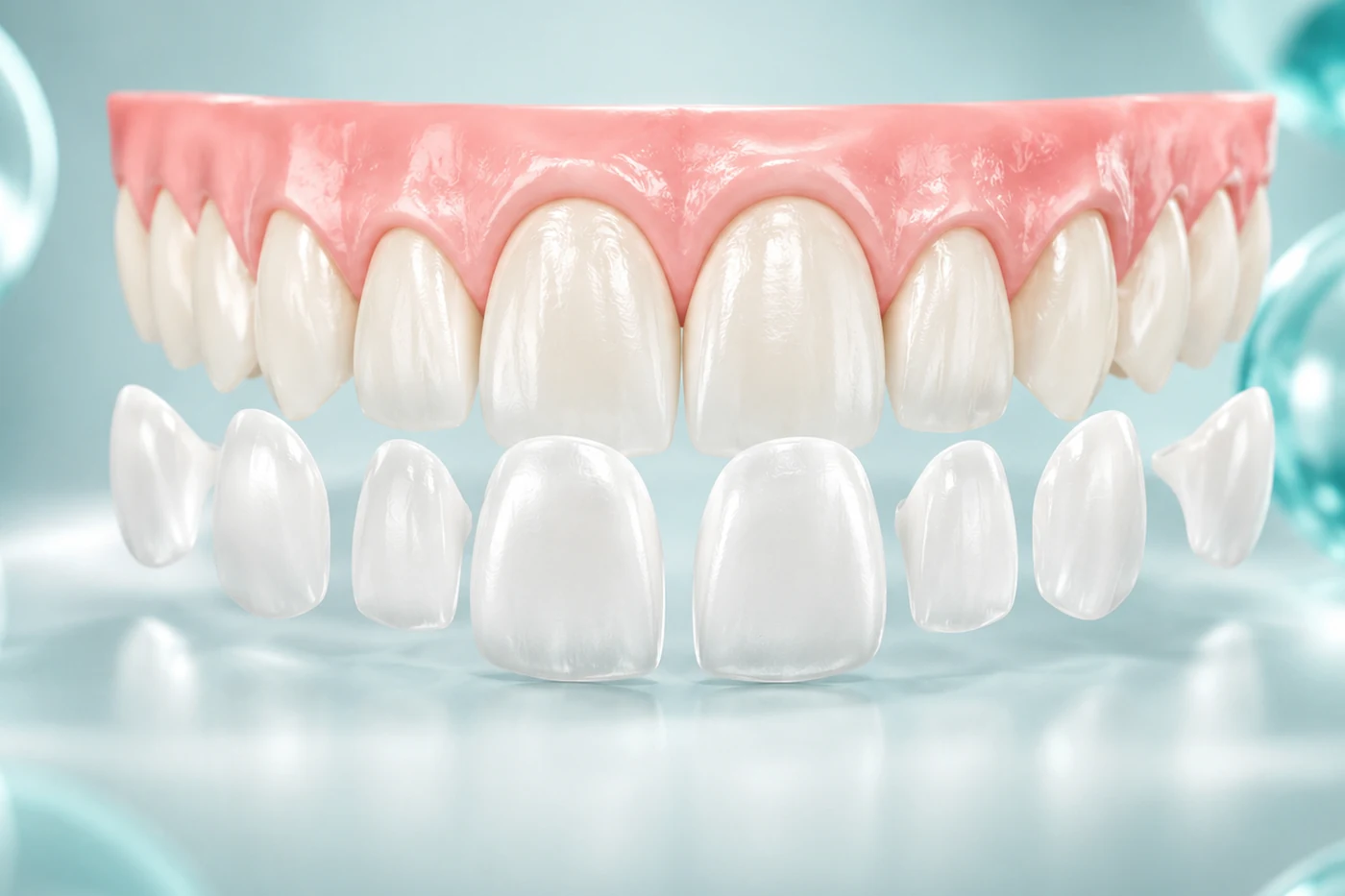
Laminate veneers are thin coverings bonded to the visible surfaces of selected teeth. They can change the appearance of shape, colour or small imperfections, but they are not a one-size-fits-all smile package. If you are considering laminate veneers in Turkey, the first question is not how many veneers to buy. It is whether your teeth are healthy enough, what tooth structure may need to change and who will support you if something needs attention after you return home.
People searching for “laminate veneer teeth” are often comparing porcelain veneers, composite bonding and full crowns. These treatments are not interchangeable. The responsible dentist should explain the diagnosis and alternatives before recommending one.
What exactly is a laminate veneer?
A veneer covers primarily the front surface of a tooth. A crown generally surrounds much more of the visible tooth. “Laminate” is often used to describe thin ceramic or porcelain veneers; practices may use the terminology differently, so ask for the actual material, manufacturing method and preparation plan in writing. A veneer improves appearance but does not replace treatment for decay, active gum disease or a functional bite problem.
Porcelain versus composite: compare the trade-offs
- Porcelain or ceramic: usually made from impressions or digital scans and then bonded after the fit, shape and shade have been checked. Laboratory production often means more than one clinical visit. Repair or replacement after damage can be more involved.
- Composite resin: tooth-coloured material can be shaped directly on teeth and may sometimes require less enamel removal. It may be more straightforward to repair, but it can stain or wear more readily.
- Neither material is right for everyone: bite forces, grinding, gum health, remaining enamel and the location of the tooth influence suitability.
Ask whether whitening, conservative bonding, orthodontics or no restorative treatment could meet your goal while preserving more natural tooth structure.
E-max veneers in Turkey: material and suitability
Patients researching E-max veneers in Turkey may encounter IPS e.max CAD, a lithium disilicate glass-ceramic used for selected dental restorations, including veneers. However, not every ceramic veneer is made from this material, and the E-max name alone does not establish whether a particular restoration is suitable for a patient.
Before choosing E-max veneers, ask the treating dentist to explain the exact ceramic product, enamel condition, bite and grinding considerations, tooth preparation, shade selection and available alternatives. Request a written quotation identifying the proposed material, laboratory work, appointments and follow-up arrangements. Material availability and suitability should be confirmed directly with the treating clinic. See the manufacturer information on IPS e.max CAD for technical details.
How much tooth preparation is really necessary?
Some veneer plans require enamel to be removed. Once tooth enamel has been removed, that change is not reversible. Marketing terms such as “no-prep” or “minimal-prep” do not guarantee that every patient can safely avoid tooth reduction. Teeth that are already prominent, have large existing fillings, or are affected by bite issues may require a different plan.
Ask the treating dentist to show the intended changes tooth by tooth. Where appropriate, a diagnostic wax-up, digital design or temporary mock-up can help you discuss tooth length, profile and smile proportions before irreversible work starts.
How to compare veneer costs in Turkey
A headline cost per veneer is not the same as the total cost of care. A useful written quotation should clearly separate what is included from what might be charged later.
- Number of teeth and the exact material and laboratory specification for each one.
- Consultation, examination, photographs, imaging and bite assessment when clinically required.
- Enamel preparation, scans or impressions, provisional restorations, try-in and final bonding.
- Treatment required before veneers, such as gum care, decay treatment or bite management.
- Post-bonding adjustment, follow-up reviews, repair or replacement terms, and potential additional travel.
- Accommodation, airport transfers and flights, where applicable, stated separately from medical services.
Prices can change after an in-person examination reveals a different dental need. Avoid comparing quotations until you understand whether both clinics propose the same clinically appropriate work.
How many appointments or days in Turkey should you plan?
The answer depends on material, laboratory workflow, number of teeth, existing dental problems and whether a further fitting appointment is needed. Composite bonding may sometimes be carried out in one visit; laboratory-made porcelain veneers commonly require assessment, preparation, fabrication and a separate fitting. This is not a fixed promise about your stay.
Ask for the confirmed clinical schedule, a chance to approve shade and shape, a bite check after bonding and enough time for corrections if needed. Do not book a non-refundable flight based only on an advertised “smile makeover in days” package.
What should be checked before you fly home?
Before leaving Turkey, ask your dentist to verify the bite and margins, explain the cleaning routine and provide material details, treatment records and a clear contact for concerns. New persistent discomfort, a veneer that feels loose, an uneven bite or gum problems merit dental review. Severe pain, swelling, bleeding or signs of infection require prompt clinical assessment rather than waiting for a remote message.
Plan who can examine you locally after you return to Germany or another country. A coordinator may help share records and organise appointments, but clinical diagnosis, treatment and follow-up remain the responsibility of licensed dental professionals.
Questions to ask before accepting an offer
- Why are veneers preferred for my teeth instead of bonding, whitening, orthodontics or crowns?
- How much enamel, if any, will be removed from each tooth?
- Is the proposed material porcelain, another ceramic or composite—and why?
- Who is the treating licensed dentist, and which clinic will deliver the treatment?
- Will I be able to approve the shade, shape and bite before final bonding?
- What happens if a veneer cracks, comes loose or needs adjustment after I leave Turkey?
- Which costs, extra visits and long-term replacement needs are not included?
Frequently asked questions
Are laminate veneers the same as full dental crowns?
No. A veneer usually covers the visible front surface, while a crown generally covers more of the tooth. Which option is suitable depends on the health and structure of the tooth, not only appearance.
Can veneers be placed without removing enamel?
Some carefully selected cases may need little or no preparation, but others require enamel reduction. Ask the dentist to explain your individual plan and whether it is reversible.
Are veneer prices in Turkey all-inclusive?
Not automatically. Ask for an itemised written quote explaining consultations, material, temporary work, final fitting, adjustments, travel services and exclusions.
Will I need dental follow-up after returning home?
Routine dental care remains important, and symptoms or a damaged veneer should be assessed by a dentist. Agree on records and follow-up arrangements before travelling.
Explore the treatment pathway
For a broader overview of candidacy, preparation and follow-up, see Turkelite Medcare’s Dental Veneers treatment guide. Turkelite Medcare can help coordinate information and the practical patient journey; the treating dental clinic remains responsible for clinical decisions and care.
Clinical references and editorial note
- American Dental Association — Veneers (patient information).
- Canadian Dental Association — Bonding and veneers.
- NHS — Dental treatments, including veneers.
Educational information only. This article does not diagnose any patient or guarantee outcomes, prices or treatment duration. A licensed treating dentist must confirm suitability, risks and the individual care plan.
This content is for general information and does not replace individual medical advice, diagnosis or treatment. Discuss treatment suitability, risks and recovery with a qualified healthcare professional.