Main options
Common options include sleeve gastrectomy, gastric bypass, one-anastomosis or mini gastric bypass, gastric balloon and selected revisional pathways.

Specialty overview
Weight loss surgery in Turkey for patients travelling from Germany and Europe: compare sleeve, bypass and other options, costs, safety, recovery, return travel and long-term follow-up.
Weight loss surgery in Turkey should be planned as a complete bariatric care pathway, especially for patients travelling from Germany and Europe. Sleeve gastrectomy, gastric bypass, mini gastric bypass, gastric balloon and revisional treatment differ in eligibility, recovery and long-term nutritional follow-up. The written plan should cover clinical assessment, surgeon and hospital responsibility, anaesthesia, hospital stay, diet, medicines, vitamins, laboratory monitoring, return-flight criteria and aftercare after returning home.

At a glance
Common options include sleeve gastrectomy, gastric bypass, one-anastomosis or mini gastric bypass, gastric balloon and selected revisional pathways.
Individual bariatric assessment is required before deciding which treatment is appropriate.
Hospital stay depends on the procedure, health status and early recovery.
For patients travelling from Germany or elsewhere in Europe, the minimum stay, required clinical review and fit-to-fly criteria should be confirmed before the return flight is booked.
Diet, supplements, blood tests and long-term follow-up may continue after returning to Germany or another European country, depending on the procedure and individual clinical plan.
Request a personalised, itemised written quotation after clinical review.
Treatment options
Sleeve gastrectomy, gastric bypass, mini gastric bypass, gastric balloon and revisional treatment differ in anatomy, benefits, limitations, nutritional follow-up and recovery. Procedure choice should follow individual bariatric assessment.
Adjustable gastric banding is a laparoscopic weight-loss operation that places an adjustable band around the upper stomach to restrict food intake.
View treatment guide →Duodenal switch is a bariatric operation combining a sleeve-shaped stomach with intestinal rerouting to produce restriction and substantial metabolic change.
View treatment guide →Endoscopic sleeve gastroplasty is a non-incisional endoscopic procedure that uses internal sutures to reduce the stomach’s functional volume.
View treatment guide →A gastric balloon is a temporary, non-surgical weight-management option placed in the stomach for a defined treatment period. Clinical assessment is required to determine suitability and the appropriate device and removal plan.
View treatment guide →Gastric band removal or conversion is revisional bariatric treatment used when a previous band needs removal, correction or conversion to another weight-loss procedure.
View treatment guide →One-anastomosis gastric bypass is a metabolic operation that creates a small gastric pouch and connects it to the small intestine with a single anastomosis.
View treatment guide →Revisional bariatric surgery addresses problems, side effects or inadequate outcomes after a previous weight-loss procedure and requires a case-specific re-operative plan.
View treatment guide →Roux-en-Y gastric bypass creates a small gastric pouch and reroutes part of the small intestine.
View treatment guide →SADI-S is a metabolic bariatric operation combining sleeve gastrectomy with a single-anastomosis intestinal bypass and requires structured long-term nutrition follow-up.
View treatment guide →Sleeve gastrectomy reduces stomach volume by surgically creating a narrow gastric sleeve.
View treatment guide →Eligibility is based on an individual bariatric assessment rather than BMI alone. The treating bariatric team should review weight history, obesity-related conditions, previous treatment, nutrition, medicines, previous surgery, anaesthetic considerations and readiness for long-term follow-up.
BMI is one part of assessment. Obesity-related conditions and the overall clinical picture can affect whether surgery is appropriate.
Previous weight-management treatment and long-term weight history should be reviewed.
Diabetes, reflux and other conditions can influence which bariatric procedure may be appropriate.
Current medicines and previous abdominal or bariatric surgery can affect treatment planning.
Patients need to understand diet progression, supplementation, laboratory monitoring and long-term follow-up.
Only the treating bariatric team can confirm individual eligibility and procedure choice after clinical assessment.
Turkey as a destination does not by itself determine whether bariatric surgery is safe. Safety depends on appropriate patient selection, the responsible bariatric surgeon, hospital capability, anaesthesia, infection prevention, postoperative monitoring, emergency capability, complication management and reliable follow-up.
The procedure should follow an individual medical and bariatric assessment.
Patients should know the responsible bariatric surgeon and hospital.
Ask about postoperative monitoring and management of urgent complications.
Anaesthetic assessment and peri-operative care are part of the safety pathway.
Safety planning should continue after discharge with clinical, nutritional and laboratory follow-up.
Bariatric procedures have recognised risks. The exact risk profile differs by procedure and individual health and should be explained by the treating team.
Bleeding and infection are recognised surgical complications.
Some bariatric procedures involve staple lines or surgical joins where a leak can occur and requires urgent assessment.
Surgery, reduced mobility and travel can affect blood-clot risk.
Anaesthesia carries risks that should be assessed individually.
Repeated vomiting or difficulty maintaining fluid intake may require clinical assessment.
Some procedures can affect reflux, vitamins, minerals and long-term nutrition.
Complications or later anatomical problems can occasionally require additional or revisional treatment.
Severe, worsening or unexpected postoperative symptoms should not be managed only through routine overseas messaging.
Severe or rapidly worsening abdominal or chest pain needs prompt medical assessment.
New breathing difficulty, chest symptoms, severe weakness or faintness require urgent attention.
Fever with worsening illness or concerning postoperative symptoms should be assessed.
Repeated vomiting or inability to keep fluids down can lead to dehydration.
New one-sided leg swelling or pain can require urgent assessment for a possible blood clot.
Vomiting blood, black stools or other significant bleeding requires prompt medical assessment.
After treatment abroad, urgent symptoms should be assessed by an appropriate local healthcare service rather than waiting for routine communication with an overseas provider or coordinator.
Recovery varies by procedure and patient. There is no single universal recovery timeline for every bariatric treatment.
Early recovery includes clinical monitoring, pain and nausea control, hydration and assessment before discharge.
Appropriate early movement may form part of recovery and blood-clot prevention.
Maintaining adequate fluid intake is important during early recovery.
Diet usually progresses in stages according to the procedure and treating bariatric plan.
Follow medicine and wound-care instructions supplied by the treating team.
Return to normal activity and exercise should follow procedure-specific clinical guidance.
Protein, vitamin and mineral requirements depend on the procedure and individual results.
The treating team should explain recommended blood tests and long-term reviews.
There is no single safe number of days for every bariatric patient. Return travel should depend on the procedure, recovery and treating-team assessment.
Different procedures require different postoperative monitoring and review.
Pain control, oral intake, mobility and overall progress should be considered before travel.
The prescribed hydration and diet plan should be manageable before return travel.
Wounds and new or concerning symptoms should be reviewed.
Mobility, clot risk and journey duration should be considered.
The treating team should confirm the minimum recommended stay and clinical readiness for return travel.
Treatments
Compare eligibility, procedure choice, nutritional support, hospital stay, supplementation and long-term follow-up—not only the operation itself.
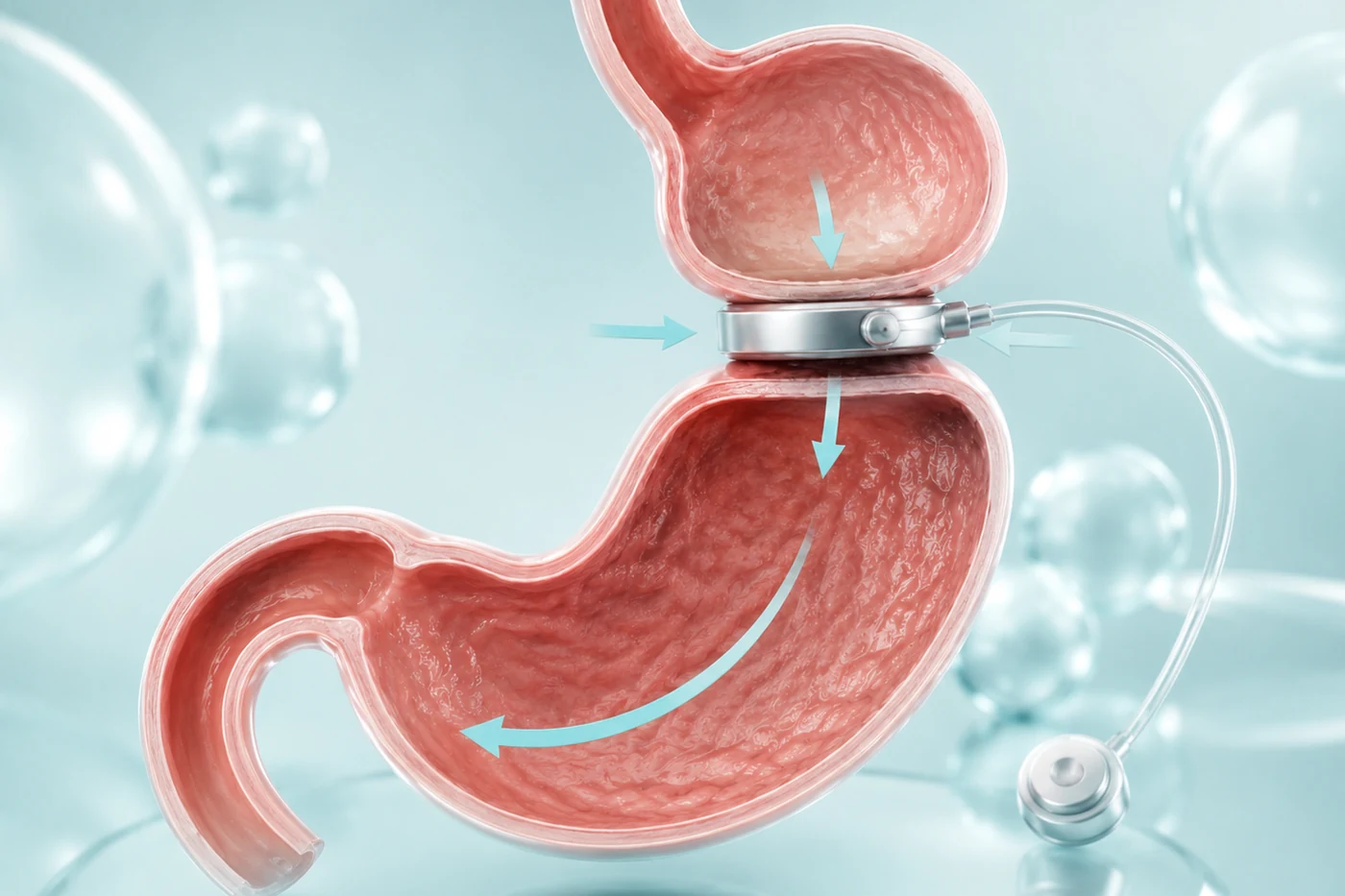
Adjustable gastric banding is a laparoscopic weight-loss operation that places an adjustable band around the upper stomach to restrict food intake.
View treatment guide →
Duodenal switch is a bariatric operation combining a sleeve-shaped stomach with intestinal rerouting to produce restriction and substantial metabolic change.
View treatment guide →
Endoscopic sleeve gastroplasty is a non-incisional endoscopic procedure that uses internal sutures to reduce the stomach’s functional volume.
View treatment guide →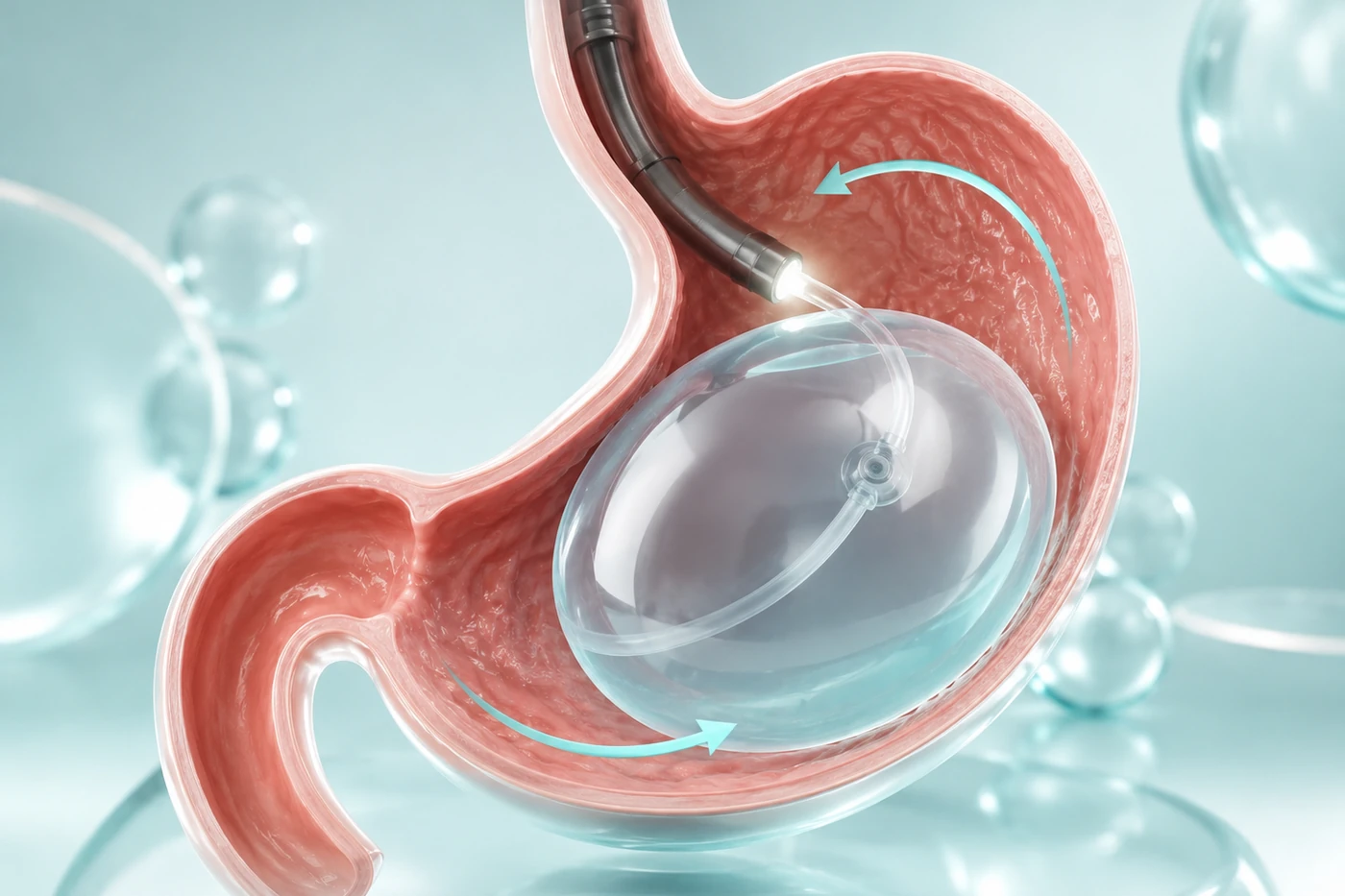 In-depth guide
A gastric balloon is a temporary, non-surgical weight-management option placed in the stomach for a defined treatment period. Clinical assessment is required to determine suitability and the appropriate device and removal plan.
View treatment guide →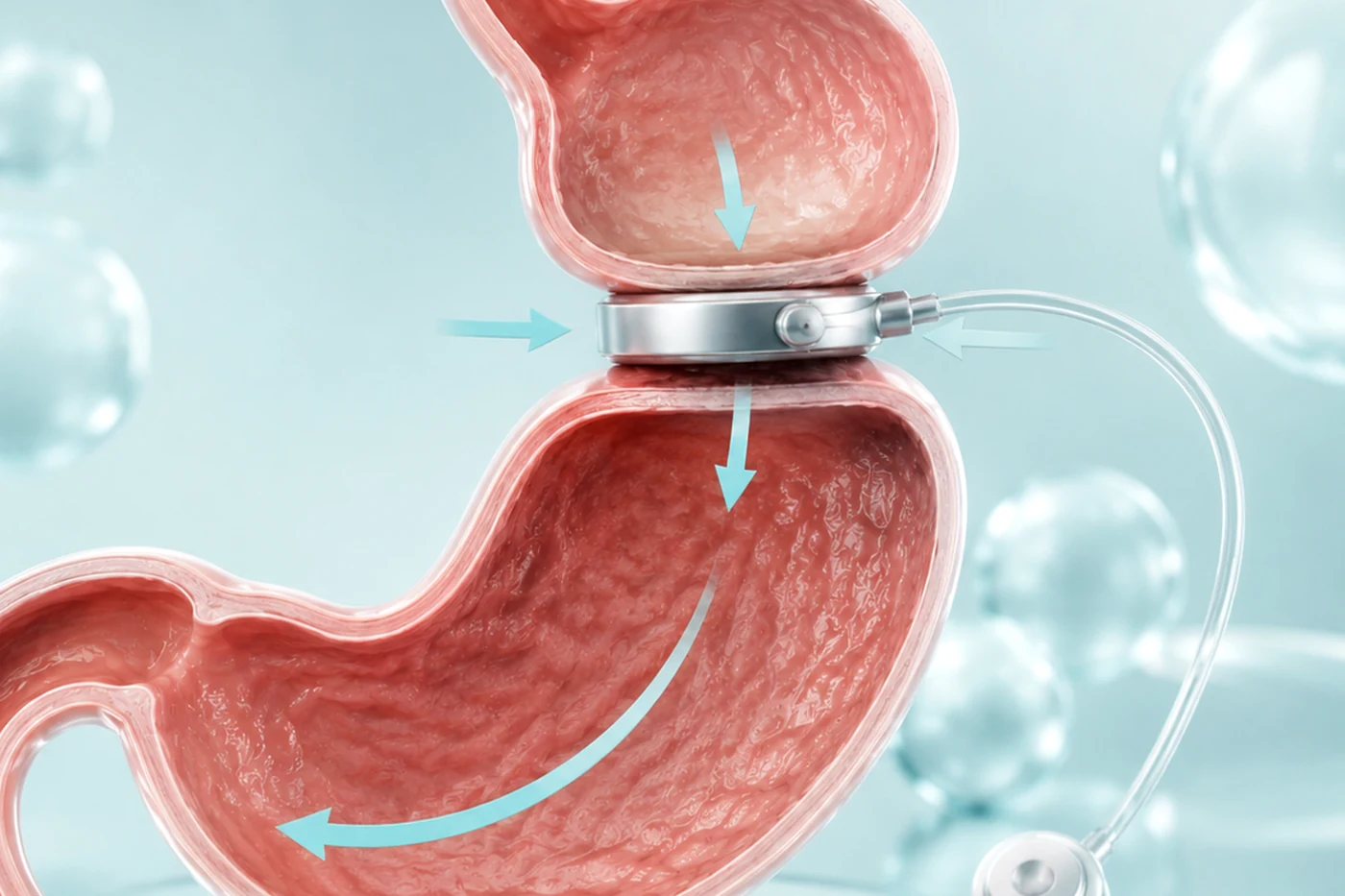
Gastric band removal or conversion is revisional bariatric treatment used when a previous band needs removal, correction or conversion to another weight-loss procedure.
View treatment guide →
One-anastomosis gastric bypass is a metabolic operation that creates a small gastric pouch and connects it to the small intestine with a single anastomosis.
View treatment guide →
Revisional bariatric surgery addresses problems, side effects or inadequate outcomes after a previous weight-loss procedure and requires a case-specific re-operative plan.
View treatment guide → In-depth guide
Roux-en-Y gastric bypass creates a small gastric pouch and reroutes part of the small intestine.
View treatment guide →
SADI-S is a metabolic bariatric operation combining sleeve gastrectomy with a single-anastomosis intestinal bypass and requires structured long-term nutrition follow-up.
View treatment guide → In-depth guide
Sleeve gastrectomy reduces stomach volume by surgically creating a narrow gastric sleeve.
View treatment guide →Cost & scope
Indicative Turkey market guidance checked on 2026-10-23. These figures are planning and comparison guides, not a Turkelite Medcare quotation. The final price depends on clinical assessment, the exact procedure, provider, hospital or clinic, technique, devices or materials, anaesthesia where applicable, length of stay and the written package scope.
A sufficiently reliable current public market range was not verified for this exact procedure. Request a personalised written quotation after clinical assessment and confirm the complete package scope.
A sufficiently reliable current public market range was not verified for this exact procedure. Request a personalised written quotation after clinical assessment and confirm the complete package scope.
A sufficiently reliable current public market range was not verified for this exact procedure. Request a personalised written quotation after clinical assessment and confirm the complete package scope.
Indicative 2026 Turkey market guidance: approximately EUR 1,800-3,200 depending on device and package scope. Final pricing requires an individual written quote after clinical assessment. Confirm all inclusions and exclusions before booking.
A sufficiently reliable current public market range was not verified for this exact procedure. Request a personalised written quotation after clinical assessment and confirm the complete package scope.
Indicative 2026 Turkey market guidance: approximately EUR 3,500-6,000 in broad published market guidance. Final pricing requires an individual written quote after clinical assessment. Confirm all inclusions and exclusions before booking.
Indicative 2026 Turkey market guidance: approximately EUR 5,000-8,500; complexity of the previous operation can change pricing substantially. Final pricing requires an individual written quote after clinical assessment. Confirm all inclusions and exclusions before booking.
Indicative 2026 Turkey market guidance: approximately EUR 4,000-6,500 in broad published market guidance. Final pricing requires an individual written quote after clinical assessment. Confirm all inclusions and exclusions before booking.
A sufficiently reliable current public market range was not verified for this exact procedure. Request a personalised written quotation after clinical assessment and confirm the complete package scope.
Indicative 2026 Turkey market guidance: approximately EUR 3,000-5,500 in broad published market guidance. Final pricing requires an individual written quote after clinical assessment. Confirm all inclusions and exclusions before booking.
Do not choose a provider on advertised price alone. Understand who is responsible for treatment and how complications and follow-up are managed.
Ask for the full name of the bariatric surgeon responsible for the operation.
Ask about relevant specialist qualifications and experience with the proposed procedure.
Confirm the hospital where the operation will be performed.
Verify relevant international health-service authorisation through official Turkish sources where applicable.
Ask who provides anaesthesia and what emergency or escalation care is available.
Ask how complications are assessed, treated and financially handled.
Confirm who answers clinical questions after discharge and how long-term follow-up works.
Ask for an itemised quotation and clear discharge documents for clinicians after you return home.
Guides & insights
Read more about treatment, planning, recovery, travel and follow-up.
Gastric band removal in Turkey: reasons for removal, gastric band to sleeve conversion, one-stage vs two-stage surgery, bypass conversion and long-term follow-up.
Read article →
Gastric sleeve revision surgery in Turkey: reasons for revision, reflux, weight recurrence, conversion options, nutritional risks, gastric bypass revision and long-term follow-up.
Read article →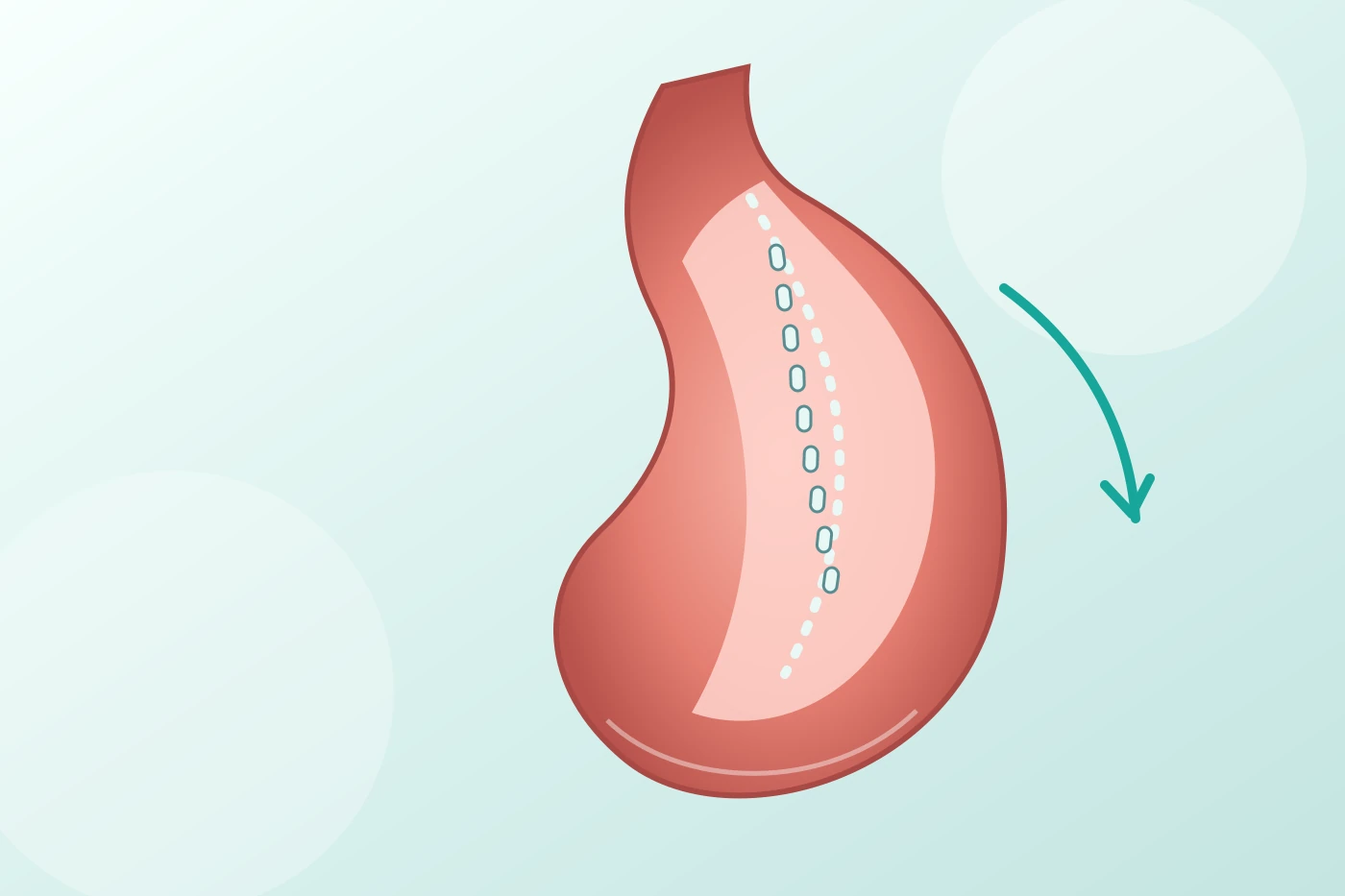
Liquid diet after gastric sleeve: understand diet stages, 64 oz/1.9 L fluid guidance, 60–100 g protein guidance, supplements, vomiting and warning signs.
Read article →
Gastric sleeve vs gastric bypass: compare weight loss, diabetes, reflux, nutrition, medication absorption, surgical risks and long-term follow-up.
Read article →
Gastric balloon vs gastric sleeve: compare temporary endoscopic treatment with permanent surgery, expected weight loss, risks, recovery, removal and gastric band differences.
Read article →
Gastric sleeve requirements in Turkey: current 2026 Turkish BMI criteria, Edmonton staging, multidisciplinary assessment, nutrition, anaesthetic review and who decides eligibility.
Read article →Patient information
Patients returning to Germany or elsewhere in Europe should leave Turkey with a clear discharge summary, operation details, medication instructions, nutritional guidance, supplement plan where required, laboratory monitoring schedule and contact pathway for clinical concerns. Turkelite Medcare can coordinate information and communication around the confirmed plan, but diagnosis, eligibility, procedure choice, medicines, surgery and clinical follow-up remain the responsibility of the treating bariatric team and the appropriate healthcare professionals providing care after return home.
Last updated: 22 Oct 2026
Frequently asked questions
No country makes bariatric surgery automatically safe. Safety depends on appropriate patient selection, surgeon, hospital, anaesthesia, infection control, complication management and follow-up.
There is no single best procedure for everyone. Sleeve, bypass, mini bypass, balloon and revisional procedures have different indications and limitations.
Cost depends on procedure, surgeon, hospital, investigations, hospital nights and included services. Ask for a current individual itemised quotation.
BMI is only one part of suitability assessment. Associated conditions, previous treatment, nutrition, medical history and ability to follow long-term care also matter.
The required stay depends on procedure and recovery. The surgeon should define minimum stay and fit-to-fly criteria.
Many bariatric patients need long-term supplementation, but the exact plan depends on procedure and laboratory results.
Return travel should be individually approved after assessment of mobility, hydration, wounds, recovery and other procedure-specific risks.
Before leaving Turkey, ask for your discharge summary, operation report, medicine list, nutrition and supplement instructions, recommended laboratory schedule and clear contact details. The treating bariatric team should define the clinical follow-up plan. After returning home, appropriate local healthcare professionals can use these records for ongoing monitoring, while Turkelite Medcare can help coordinate communication around the confirmed treatment pathway.
Sources
Decision snapshot
The treating clinic and clinician should be identifiable, licensed and responsible for assessment, consent, treatment and clinical aftercare.
The treating clinic should explain suitability, alternatives, what could change after examination and where uncertainty remains.
The written scope should separate treatment, diagnostics, medicines, accommodation, transfers and anything that may cost extra.
You should know the expected milestones, warning signs, review schedule, records you receive and the route for urgent questions.
Your next step
If you are travelling from Germany or elsewhere in Europe, share your treatment goals, relevant medical information and travel preferences. We can coordinate provider review, written treatment information, travel planning and the return-home handover around the clinical plan confirmed by the treating team.
Request My Treatment Plan →