Main options
Hair restoration planning may include FUE-based transplantation, implantation techniques and selected surgical alternatives depending on donor area, hair-loss pattern and clinical assessment.

Specialty overview
Hair-restoration pathways with attention to donor assessment, technique, operator roles and realistic follow-up.
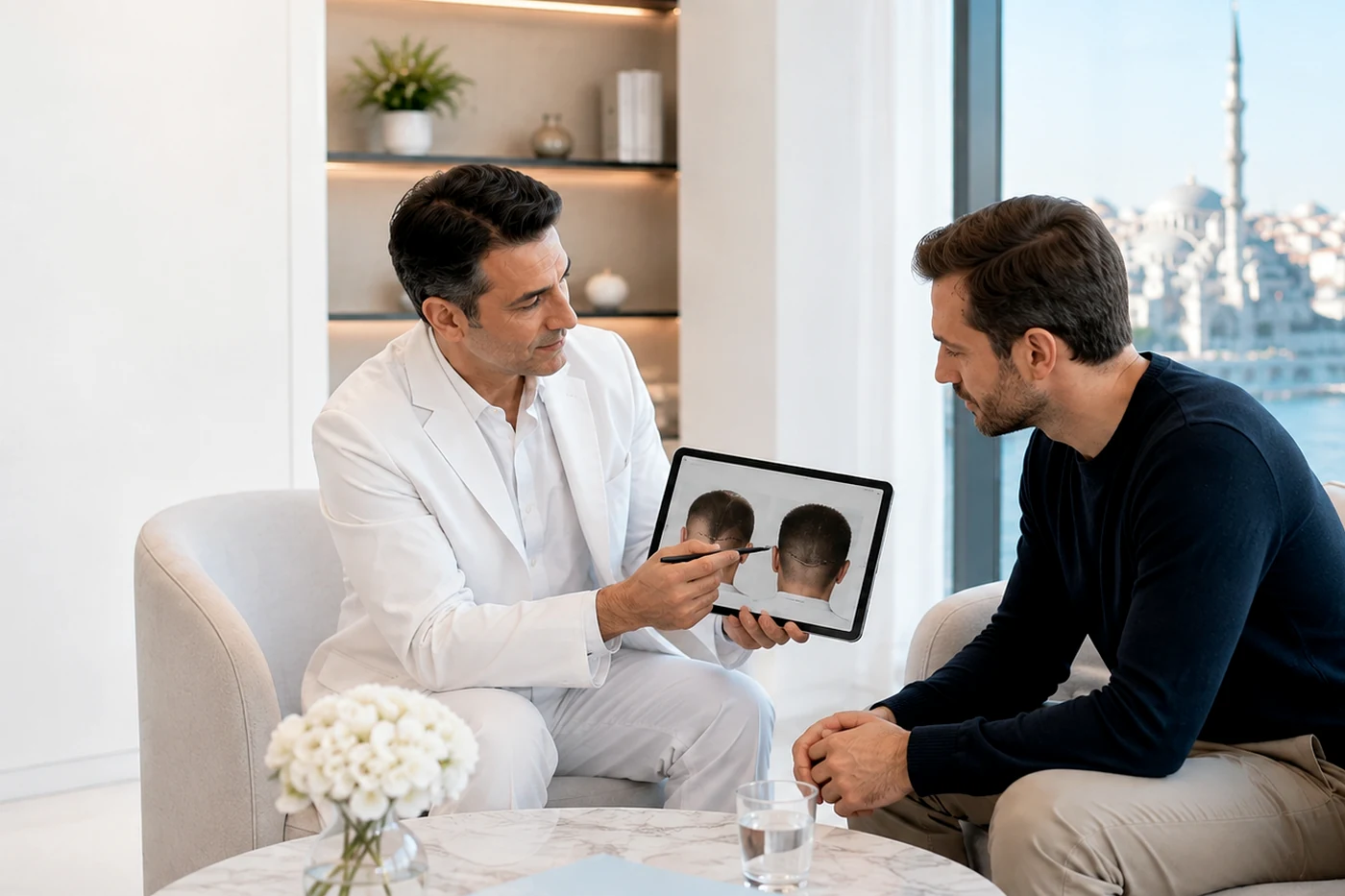
Hair-restoration treatment in Turkey should be planned around the donor area, pattern of hair loss and long-term appearance rather than the maximum graft number advertised. The consultation should explain whether FUE, DHI or another approach is being proposed, who performs extraction and implantation, how grafts are distributed, how future hair loss is considered and what early recovery instructions apply. A written plan should separate realistic result timing from early healing and explain how the clinic handles follow-up if concerns arise after the patient returns home.
At a glance
Hair restoration planning may include FUE-based transplantation, implantation techniques and selected surgical alternatives depending on donor area, hair-loss pattern and clinical assessment.
Donor density, scalp health, hair-loss pattern, medical history and realistic long-term planning should be reviewed before a graft plan is confirmed.
A graft number should follow individual assessment. A marketing package or photograph alone cannot determine the appropriate number of grafts.
Fresh grafts require careful protection during early healing. Washing, sleeping and medication instructions should come from the treating clinic.
Return travel should be planned around the treating team review, early scalp care and any procedure-specific advice.
Ask for a personalised written quote after clinical review rather than comparing only advertised graft packages.
Treatment options
Hair restoration techniques should be compared by diagnosis, donor-area limitations, extraction and implantation approach, clinician responsibility, expected aftercare and long-term hair-loss planning. Active procedures are loaded automatically from the Hair Restoration treatment library.
A beard transplant redistributes hair follicles from a donor area into selected beard or moustache zones using a planned density, direction and donor strategy.
View treatment guide →DHI is commonly used to describe implantation with a pen-style implanter after follicular units have been harvested.
View treatment guide →An eyebrow transplant places selected donor follicles into the brow using very careful angle, direction and density planning to match natural eyebrow growth.
View treatment guide →Female hair transplantation redistributes donor follicles into selected thinning areas after assessment of the hair-loss pattern and donor capacity.
View treatment guide →FUE is a hair-restoration technique in which individual follicular units are harvested from a donor area and placed into planned recipient sites.
View treatment guide →FUT hair transplantation removes a donor strip from the scalp, separates follicular units and transplants them into planned recipient sites.
View treatment guide →Hair-transplant repair or correction addresses selected density, hairline, scarring or graft-placement concerns after a previous transplant.
View treatment guide →Sapphire FUE is an FUE hair-transplant pathway marketed around sapphire-blade recipient-site creation; donor quality, hairline design and operator technique remain central.
View treatment guide →Scar hair transplantation places selected follicles into suitable scar tissue after assessment of scar quality, blood supply and realistic density expectations.
View treatment guide →Unshaven FUE is an FUE approach designed to reduce or avoid visible shaving in selected donor or recipient areas while preserving the same donor-planning principles.
View treatment guide →Treatments
Understand donor assessment, graft planning, extraction and implantation roles, recovery and what results can realistically be assessed over time.

A beard transplant redistributes hair follicles from a donor area into selected beard or moustache zones using a planned density, direction and donor strategy.
View treatment guide →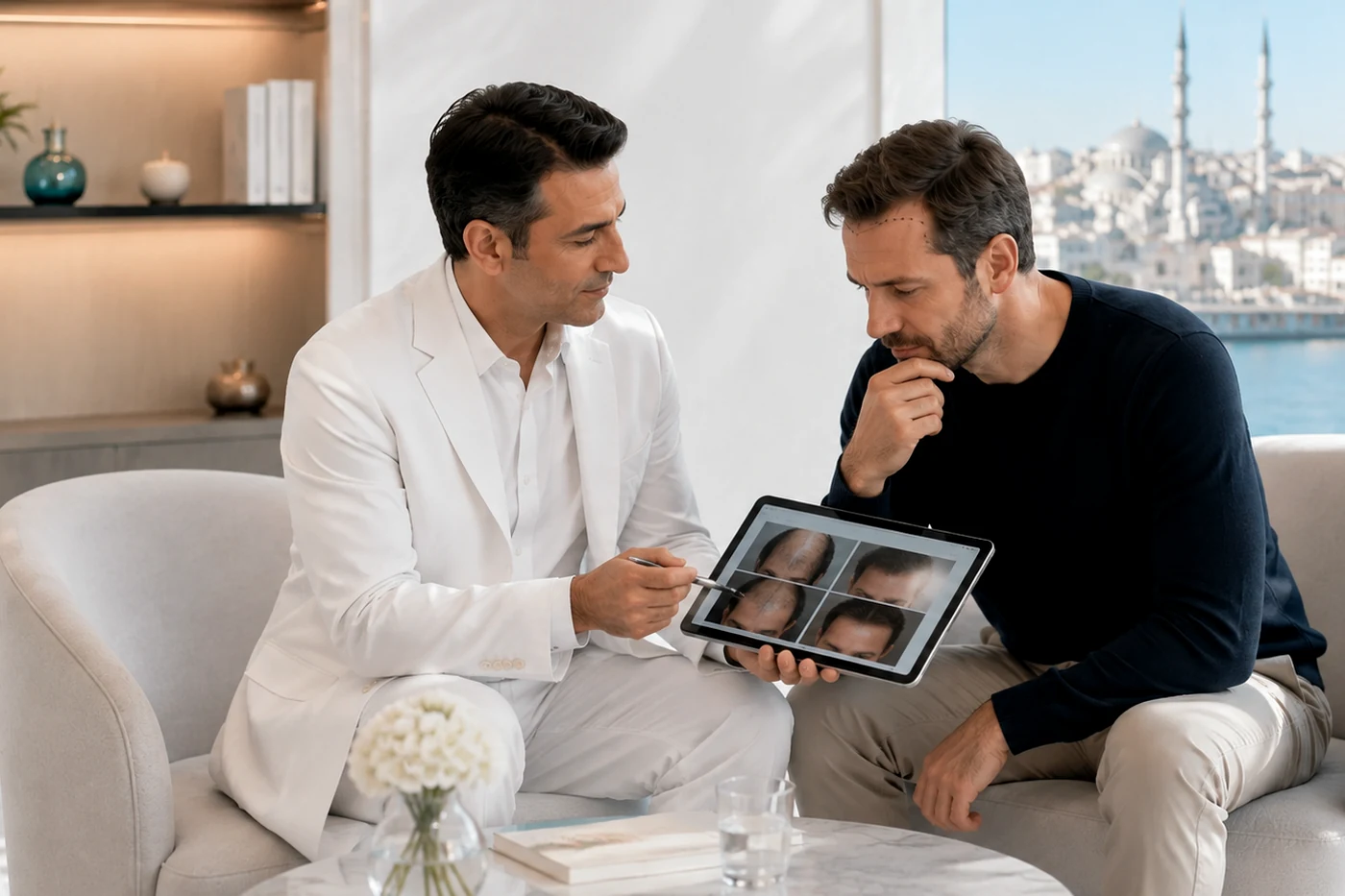 In-depth guide
DHI is commonly used to describe implantation with a pen-style implanter after follicular units have been harvested.
View treatment guide →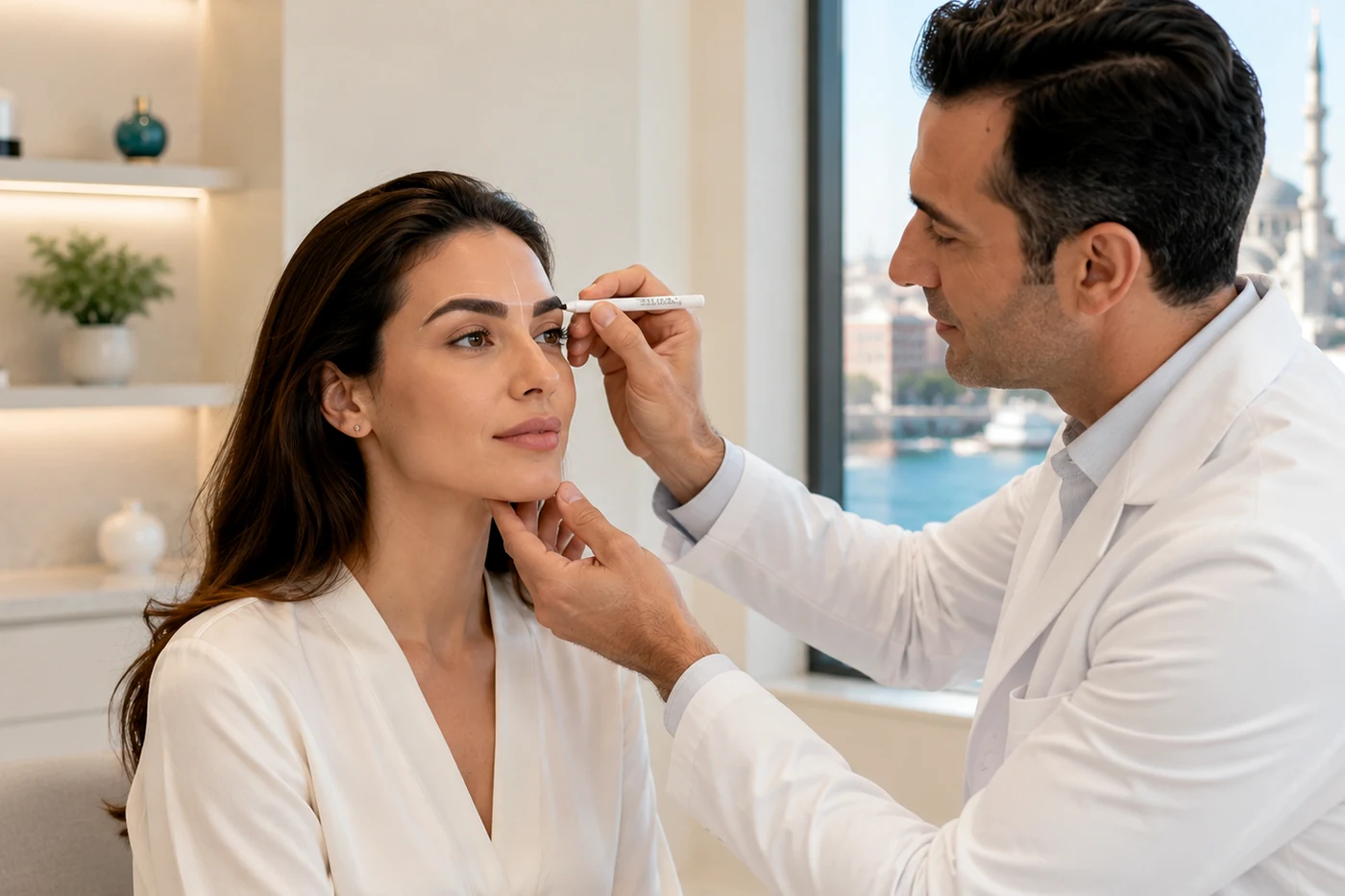
An eyebrow transplant places selected donor follicles into the brow using very careful angle, direction and density planning to match natural eyebrow growth.
View treatment guide →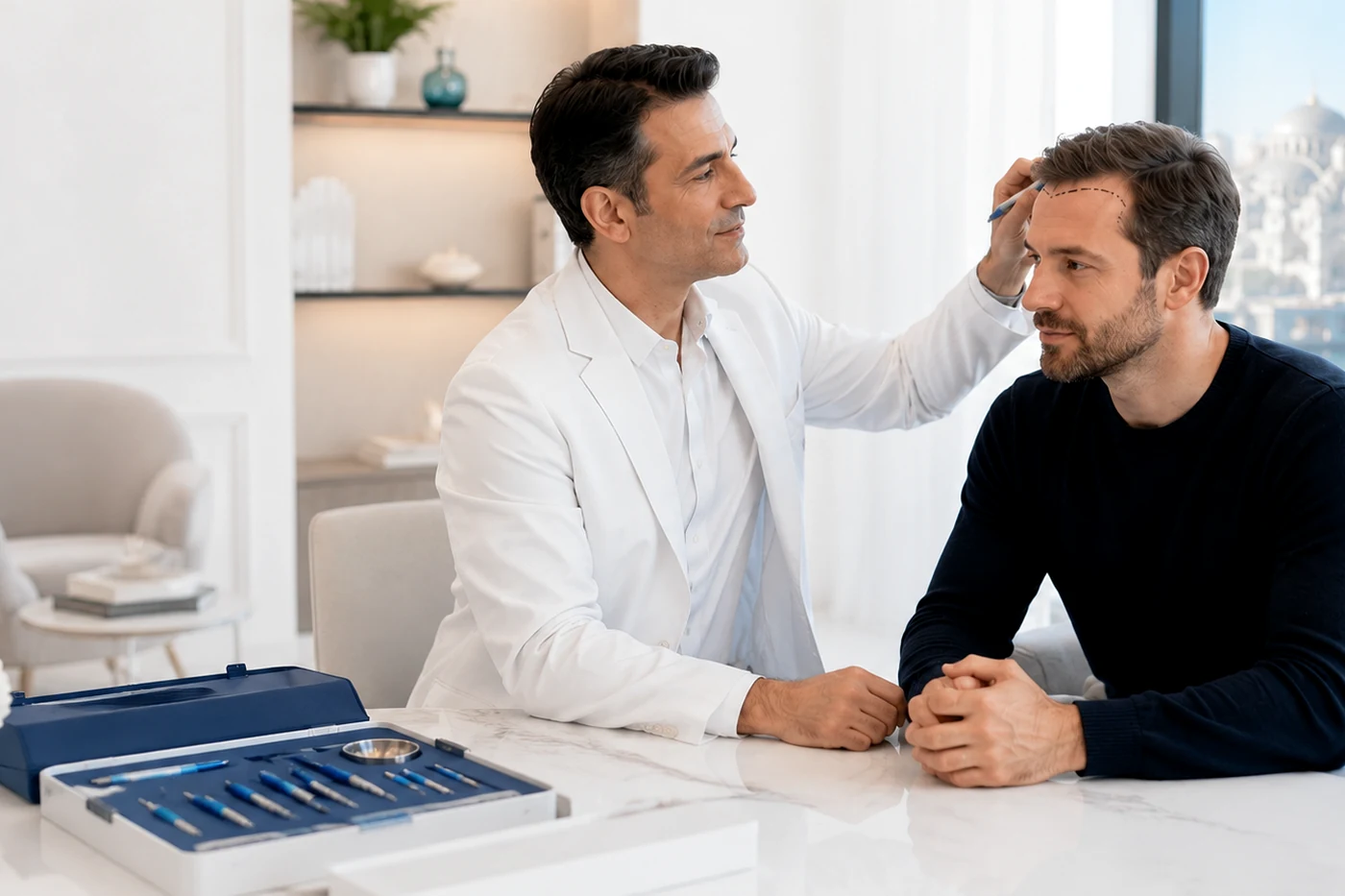
Female hair transplantation redistributes donor follicles into selected thinning areas after assessment of the hair-loss pattern and donor capacity.
View treatment guide →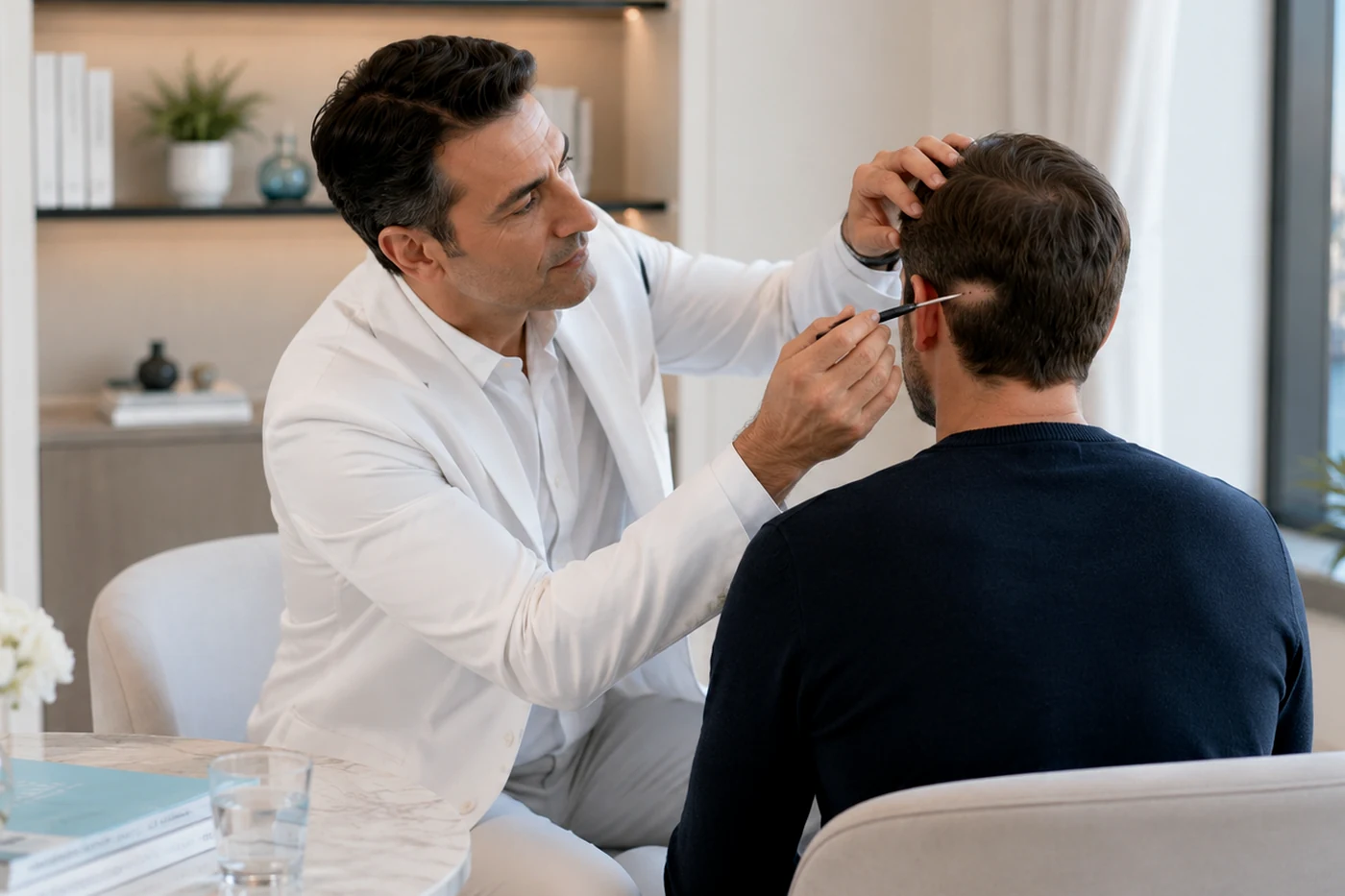 In-depth guide
FUE is a hair-restoration technique in which individual follicular units are harvested from a donor area and placed into planned recipient sites.
View treatment guide →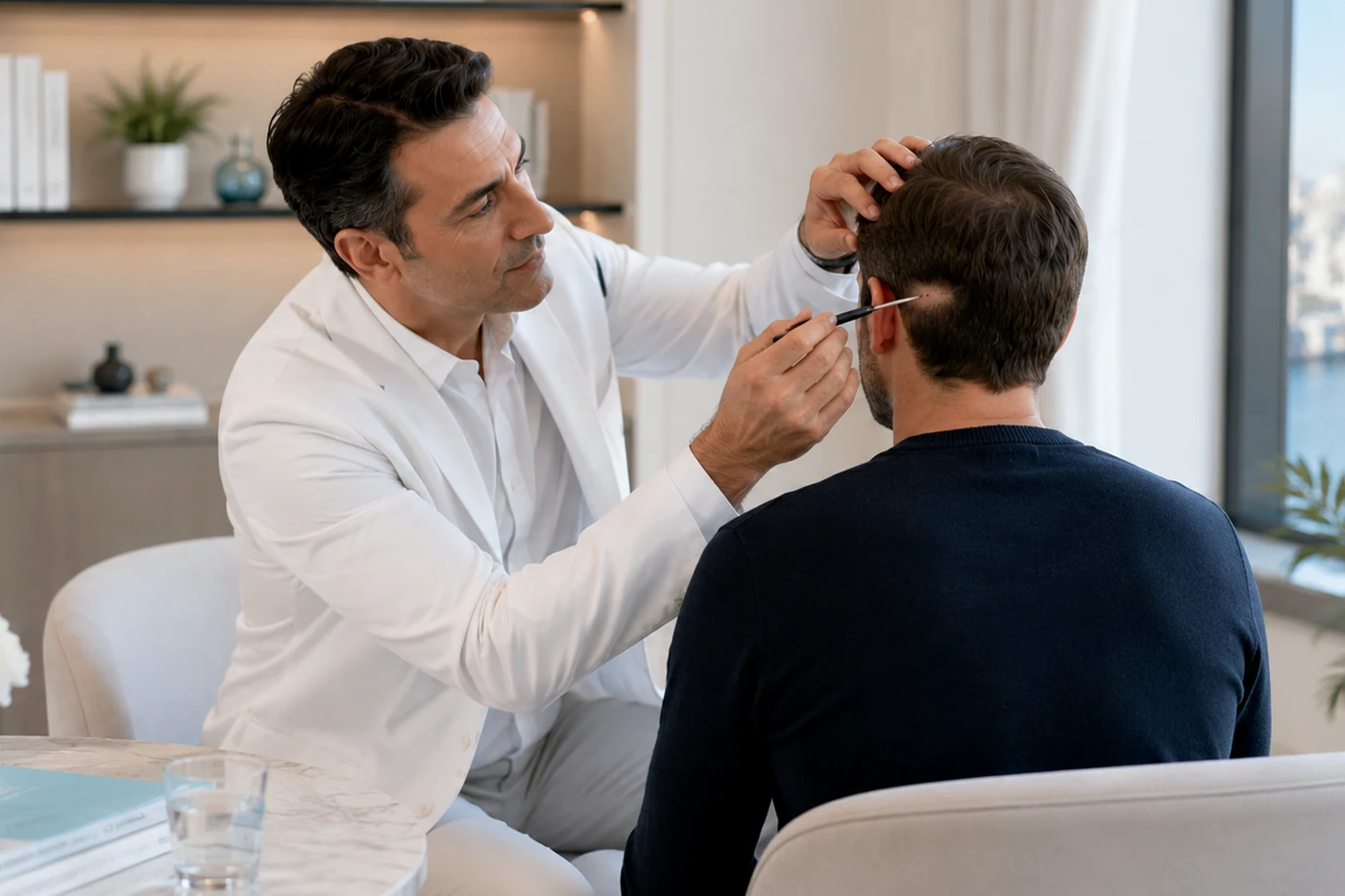
FUT hair transplantation removes a donor strip from the scalp, separates follicular units and transplants them into planned recipient sites.
View treatment guide →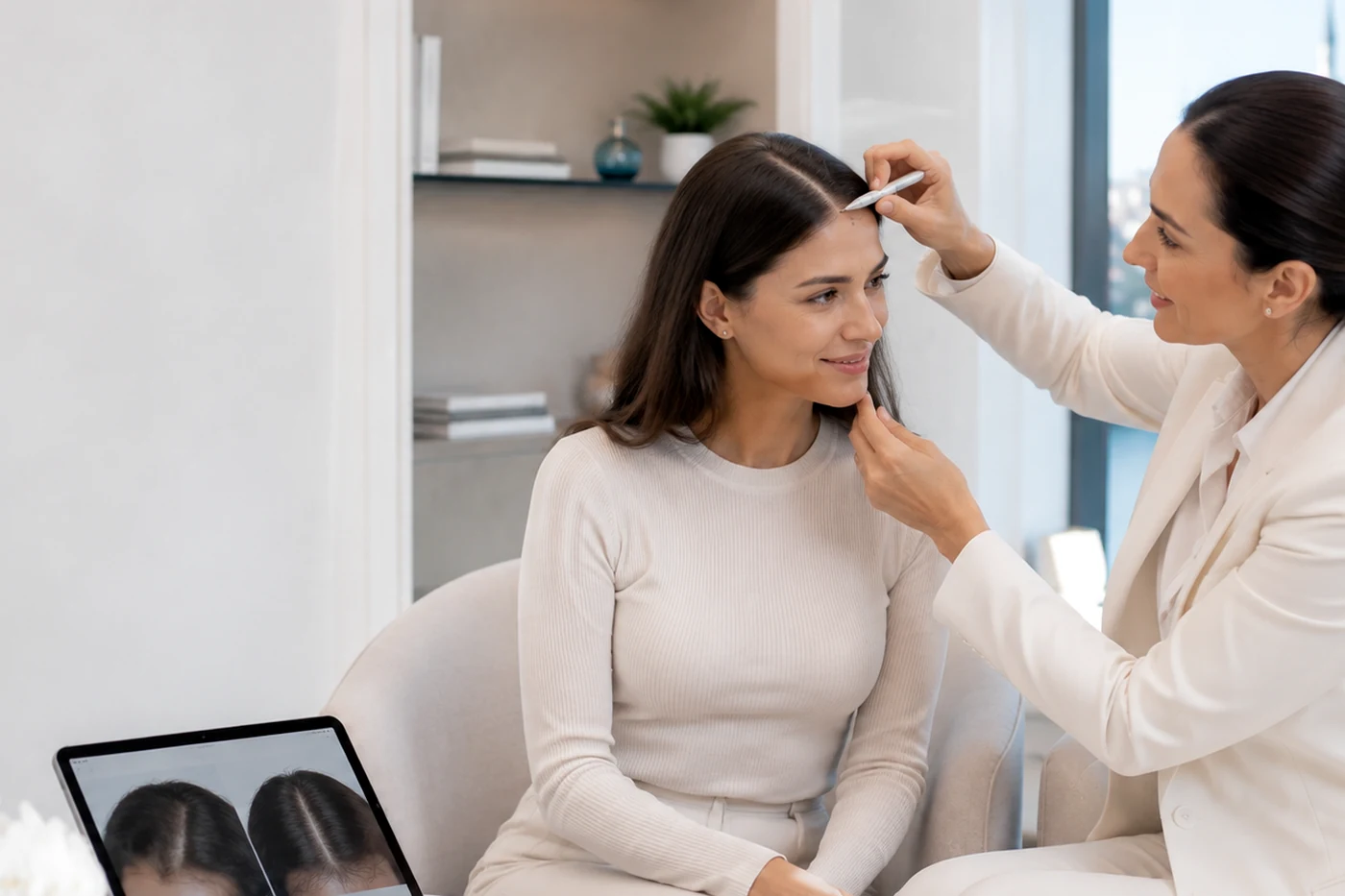
Hair-transplant repair or correction addresses selected density, hairline, scarring or graft-placement concerns after a previous transplant.
View treatment guide →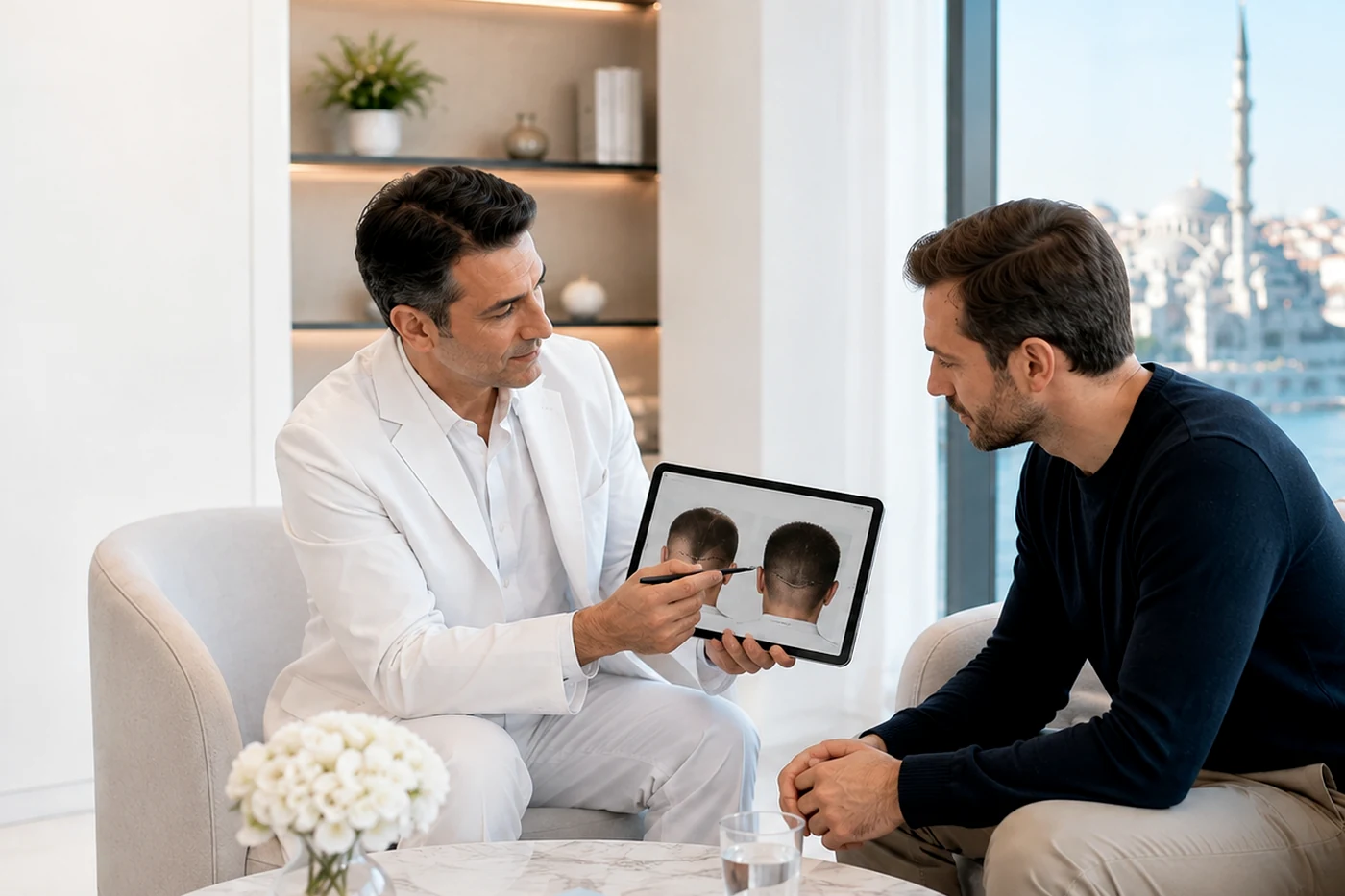
Sapphire FUE is an FUE hair-transplant pathway marketed around sapphire-blade recipient-site creation; donor quality, hairline design and operator technique remain central.
View treatment guide →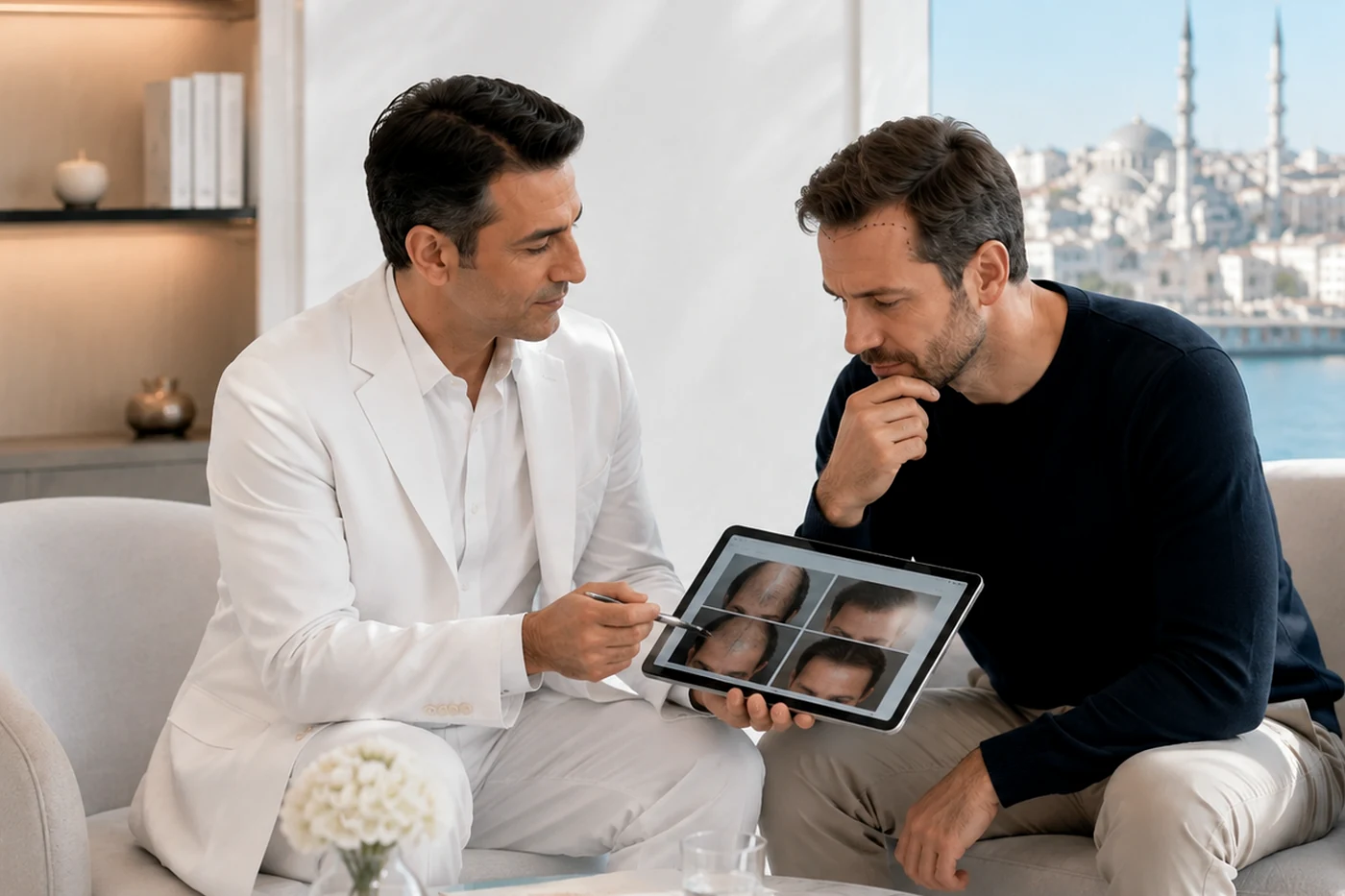
Scar hair transplantation places selected follicles into suitable scar tissue after assessment of scar quality, blood supply and realistic density expectations.
View treatment guide →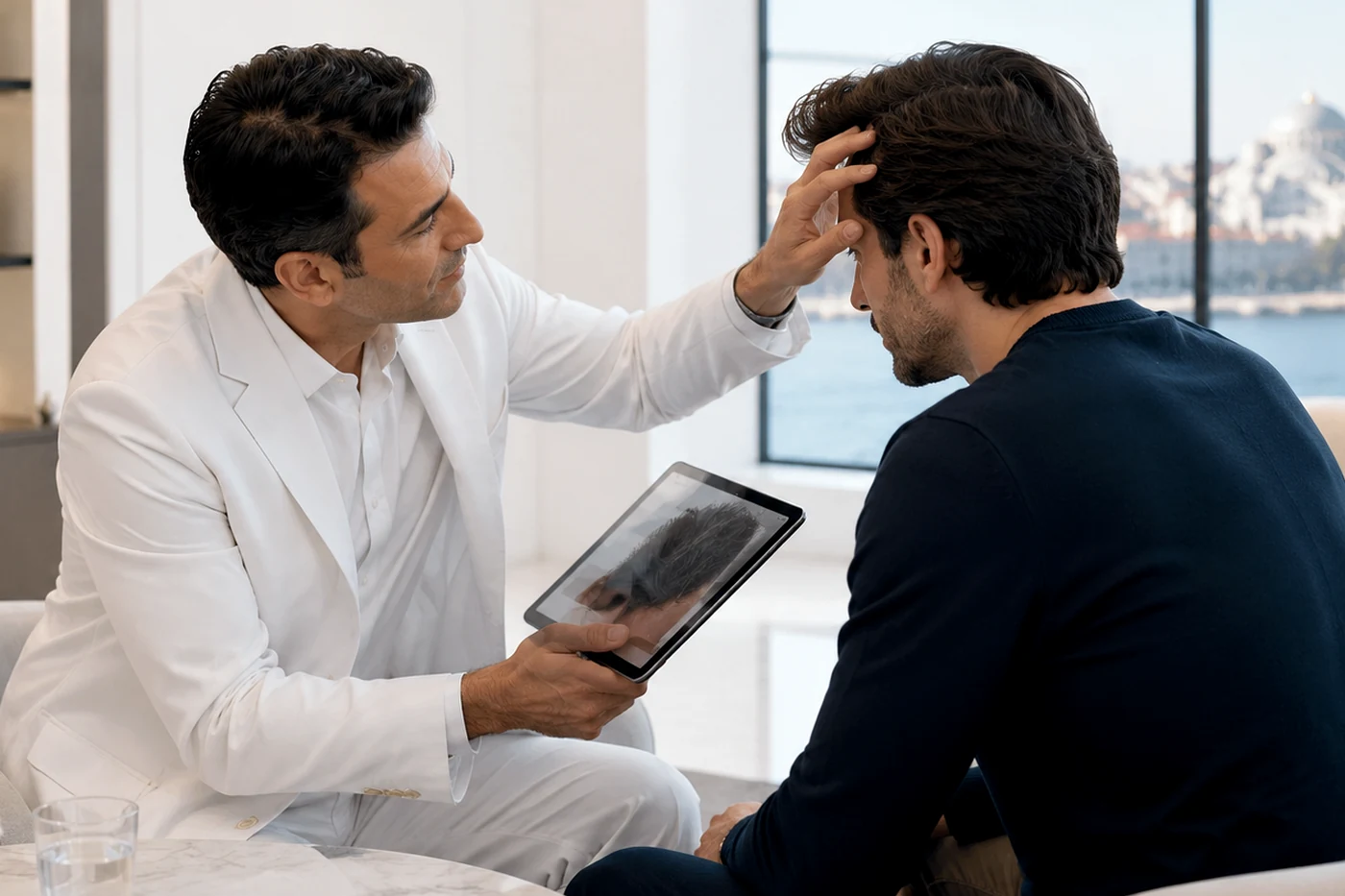
Unshaven FUE is an FUE approach designed to reduce or avoid visible shaving in selected donor or recipient areas while preserving the same donor-planning principles.
View treatment guide →Cost & scope
Indicative Turkey market guidance checked on 2026-10-23. These figures are planning and comparison guides, not a Turkelite Medcare quotation. The final price depends on clinical assessment, the exact procedure, provider, hospital or clinic, technique, devices or materials, anaesthesia where applicable, length of stay and the written package scope.
Indicative 2026 Turkey market guidance: EUR 2,600-5,200. Final pricing requires an individual written quote after clinical assessment. Confirm all inclusions and exclusions before booking.
Indicative 2026 Turkey market guidance: EUR 3,000-5,850. Final pricing requires an individual written quote after clinical assessment. Confirm all inclusions and exclusions before booking.
Indicative 2026 Turkey market guidance: EUR 1,300-3,250. Final pricing requires an individual written quote after clinical assessment. Confirm all inclusions and exclusions before booking.
A sufficiently reliable current public market range was not verified for this exact procedure. Request a personalised written quotation after clinical assessment and confirm the complete package scope.
Indicative 2026 Turkey market guidance: EUR 2,600-5,850. Final pricing requires an individual written quote after clinical assessment. Confirm all inclusions and exclusions before booking.
A sufficiently reliable current public market range was not verified for this exact procedure. Request a personalised written quotation after clinical assessment and confirm the complete package scope.
A sufficiently reliable current public market range was not verified for this exact procedure. Request a personalised written quotation after clinical assessment and confirm the complete package scope.
Indicative 2026 Turkey market guidance: EUR 3,000-7,800. Final pricing requires an individual written quote after clinical assessment. Confirm all inclusions and exclusions before booking.
A sufficiently reliable current public market range was not verified for this exact procedure. Request a personalised written quotation after clinical assessment and confirm the complete package scope.
Indicative 2026 Turkey market guidance: EUR 2,600-5,850. Final pricing requires an individual written quote after clinical assessment. Confirm all inclusions and exclusions before booking.
Guides & insights
Read more about treatment, planning, recovery, travel and follow-up.
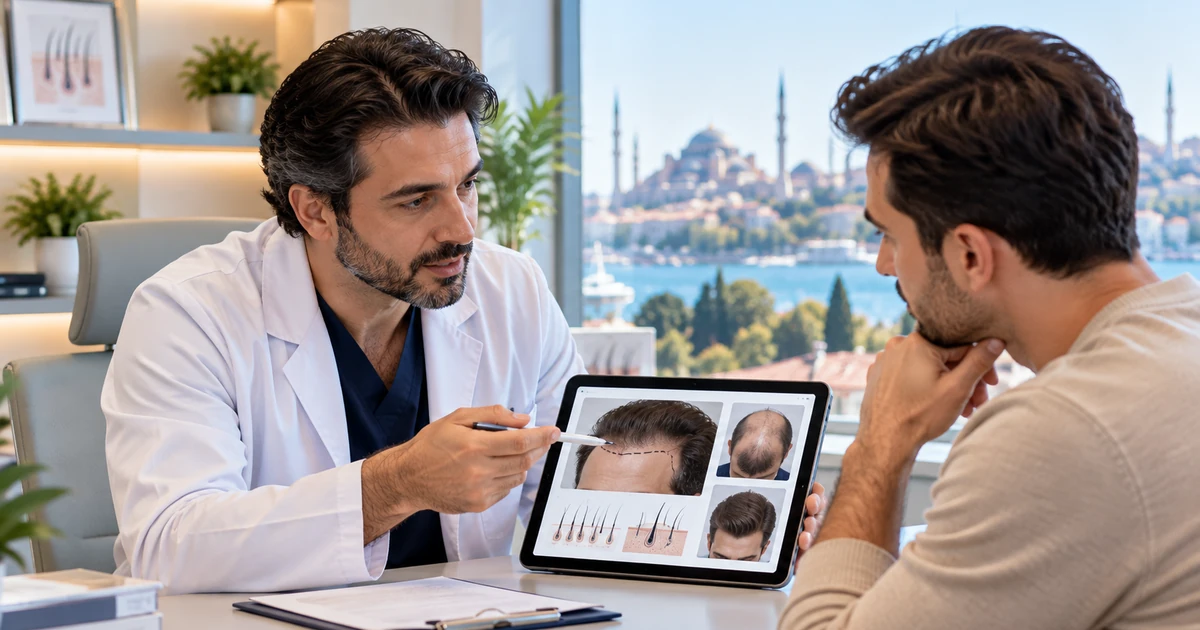
Choosing a hair transplant clinic in Istanbul? Learn how to verify surgeon roles, clinic credentials, donor planning, risks and aftercare before booking.
Read article →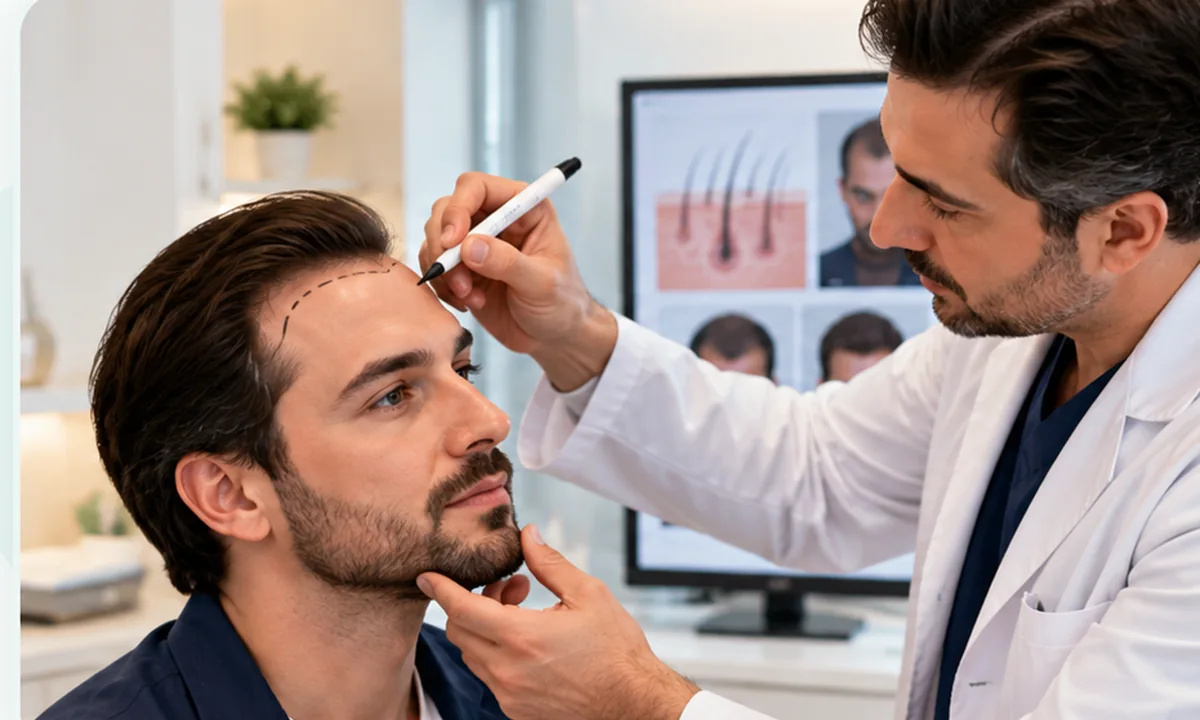
Compare hair transplant costs in Turkey: graft planning, FUE vs DHI, package inclusions, aftercare and questions to ask before booking.
Read article →
Eyebrow transplant recovery: day-by-day healing, crusts, shedding, regrowth from 3–4 months, more complete growth by 6–8 months, grooming and warning signs.
Read article →
Unshaven hair transplant explained: no-shave and long-hair FUE, technique differences, evidence, donor limits, recovery and questions before treatment.
Read article →
Can a bad hair transplant be fixed? Learn about hairline repair, misplaced grafts, donor overharvesting, scars, scalp micropigmentation and donor limitations.
Read article →
Beard transplant recovery day by day: graft protection, scabs, shaving, shedding, early growth, healing stages and warning signs.
Read article →Guides & insights
Explore clinic selection, costs, preparation, techniques, recovery and aftercare.
Patient information
Hair transplantation requires an individual assessment of hair loss, donor supply, scalp health and expectations. Turkelite Medcare coordinates information, provider communication and travel planning, while diagnosis, graft planning, procedure choice and clinical aftercare remain the responsibility of the treating medical team.
Last updated: 22 Oct 2026
Frequently asked questions
No destination makes a procedure automatically safe. Safety depends on appropriate assessment, the responsible medical team, facility standards, informed consent, infection control and access to aftercare.
There is no technique that is automatically best for every patient. The recommendation should reflect donor supply, recipient area, hair characteristics, the required design and the treating clinician assessment.
The appropriate graft number depends on the size of the treatment area, donor density, hair characteristics and long-term hair-loss pattern. It should be confirmed after individual assessment.
Hair growth develops gradually over many months. Individual timing varies, so the treating clinic should explain the expected recovery and growth timeline for the procedure performed.
The required stay depends on the treatment schedule and early review. Confirm the minimum stay with the treating clinic before fixing the return flight.
Get a clear clinical contact route and written aftercare before travel. Unexpected or severe symptoms should be assessed by an appropriate healthcare professional rather than relying only on remote coordination.
Sources
Decision snapshot
The treating clinic and clinician should be identifiable, licensed and responsible for assessment, consent, treatment and clinical aftercare.
The treating clinic should explain suitability, alternatives, what could change after examination and where uncertainty remains.
The written scope should separate treatment, diagnostics, medicines, accommodation, transfers and anything that may cost extra.
You should know the expected milestones, warning signs, review schedule, records you receive and the route for urgent questions.
Your next step
Share your hair-loss concerns, photographs and travel preferences so provider review and the treatment journey can be coordinated before booking.
Request My Treatment Plan →